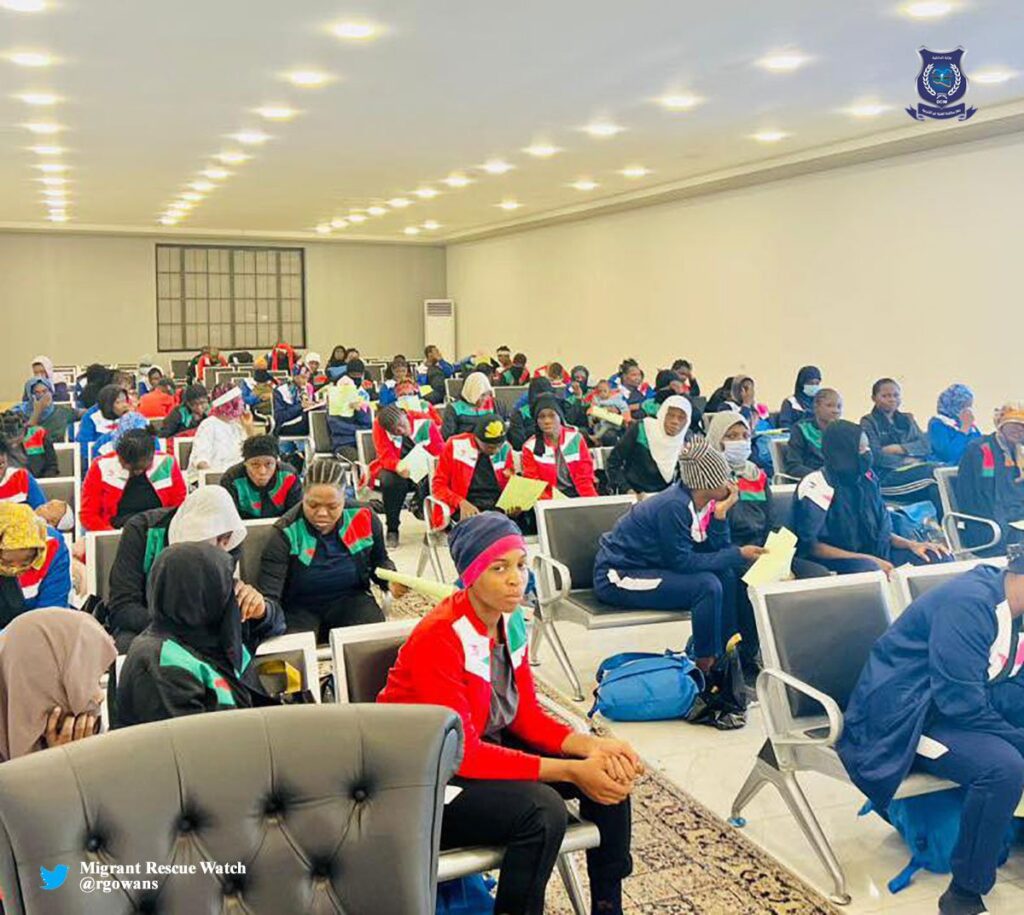
Eighty Nigerian nationals have been sent back home from Libya following a coordinated repatriation operation carried out on Wednesday at Mitiga International Airport in Tripoli.
The Department for Combating Illegal Migration (DCIM), working alongside the Nigerian Consulate in Tripoli, executed the deportation as part of broader initiatives to address irregular migration and reduce congestion in detention facilities across the North African nation.
Migrant Rescue Watch, an advocacy organization that tracks the welfare and human rights conditions of migrants in Libya, confirmed that the deportation was executed under judicial directives from the Libyan Judicial Police and orders issued by the Public Prosecutor’s Office.
In a statement released on social media platform X on Wednesday, the organization disclosed that the Judicial Police Department had transferred a group of undocumented female migrants of Nigerian nationality to DCIM custody in Tripoli. All individuals affected received formal judicial deportation orders prior to their return.
The organization further noted that the 80 returnees include migrants who had been detained across multiple holding facilities in Libya and were subsequently moved to Tripoli under supervised security arrangements ahead of their scheduled departure.
Nigerian consular officials reportedly provided critical support throughout the process, ensuring that all returnees were properly documented and received necessary assistance before boarding their flight home.
This deportation exercise represents one of several similar operations as Libyan authorities work with diplomatic missions from various African nations to manage the presence of undocumented migrants in the country.
Libya continues to serve as a major transit hub for thousands of African migrants seeking passage across the Mediterranean Sea to Europe in search of economic opportunities and safety. The country’s strategic location and ongoing political instability have made it a critical point along irregular migration routes from sub-Saharan Africa.
International organizations have repeatedly raised concerns about conditions within Libyan detention centers, citing issues such as severe overcrowding, inadequate sanitation, and documented cases of abuse. Human rights groups have called for comprehensive approaches that address the root causes of irregular migration while establishing safer, legal pathways for migration.
The latest repatriation comes amid heightened international scrutiny of migration policies in North Africa and growing pressure on Libyan authorities to improve humanitarian standards in their treatment of detained migrants.