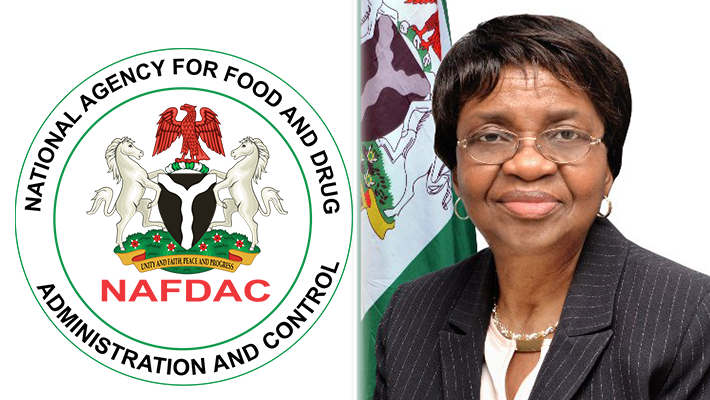
Nigeria will witness the final phase-out of alcohol packaged in sachets and small bottles when enforcement begins on January 1, 2026, the National Agency for Food and Drug Administration and Control (NAFDAC) has confirmed.
Professor Mojisola Christianah Adeyeye, Director-General of NAFDAC, disclosed this during a media briefing in Abuja on Tuesday, revealing that the Federal Government has granted approval for the agency to recruit 1,000 additional personnel starting December 2025 to strengthen its regulatory capacity.
The initiative, which received backing from the Nigerian Senate and the Federal Ministry of Health and Social Welfare, targets the elimination of spirit drinks sold in sachets and containers below 200 millilitres. According to Professor Adeyeye, the decision aims to protect vulnerable populations, particularly children, teenagers and young adults, from alcohol-related harm.
The NAFDAC boss emphasized that cheap, easily accessible alcohol packaging has fuelled addiction among Nigerian youths and commercial drivers, contributing to domestic violence, road crashes, school abandonment and other societal problems.
“We cannot continue to prioritize short-term economic considerations over the wellbeing of Nigerians, especially our children,” Professor Adeyeye stated. “A nation’s genuine prosperity lies in the health of its citizens.”
The regulatory chief explained that the prohibition follows a structured timeline dating back to December 2018. At that time, NAFDAC partnered with the Federal Ministry of Health and the Federal Competition and Consumer Protection Commission (FCCPC) to sign a five-year agreement with industry stakeholders, including the Association of Food, Beverage and Tobacco Employers (AFBTE) and the Distillers and Blenders Association of Nigeria (DIBAN), setting January 31, 2024 as the initial deadline.
The timeline was subsequently extended to December 2025 to allow manufacturers adequate time to reconfigure production facilities and clear existing inventory.
Professor Adeyeye clarified that the regulation specifically covers two product categories: spirit drinks in sachets and those in PET or glass bottles under 200ml. Other alcoholic beverage formats remain unaffected by the directive.
She firmly stated that no additional extensions would be granted beyond the December 2025 compliance deadline, dismissing industry arguments about potential job losses. “Job displacement concerns were raised in 2018, and we provided years for adequate planning. How long should we continue citing employment losses while our children face addiction and death?” she questioned.
The Director-General noted that the policy aligns with Nigeria’s obligations under the World Health Organization’s Global Strategy to Reduce the Harmful Use of Alcohol, Resolution WHA63.13, adopted in 2010.
Professor Adeyeye described the measure as protective rather than punitive, grounded in scientific evidence and international public health standards. She stressed that the ban represents a collective national responsibility, not merely a regulatory mandate for NAFDAC.
To ensure successful implementation, NAFDAC will collaborate with the Federal Ministry of Health and Social Welfare, the Federal Competition and Consumer Protection Commission, and the National Orientation Agency (NOA) to execute comprehensive awareness campaigns highlighting the health and social risks associated with alcohol misuse.
The agency has called on all stakeholders, including producers, distributors and retailers, to ensure full compliance by the stipulated deadline, warning that enforcement will be rigorous from January 2026.