5th December, 2025.
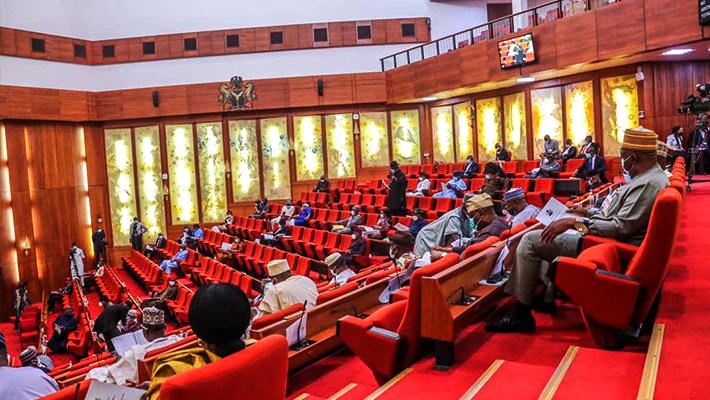
Nigerian lawmakers on Thursday declared a public health emergency in Ogijo, a border community between Lagos and Ogun States, following revelations of severe lead poisoning traced to battery recycling factories operating in the area.
Senator Mukhail Adetokunbo Abiru, representing Lagos East, and Senator Gbenga Daniel from Ogun East jointly moved the motion under Matters of Urgent Public Importance during plenary.
The lawmakers cited investigations revealing contamination levels reaching 186 times above international safety limits, with residents experiencing chronic symptoms including persistent headaches, seizures, memory loss, and developmental delays in children.
“Children are dying slowly. Families have lived for years under poisonous smoke and dust,” Senator Abiru told the chamber, describing Ogijo as an environmental catastrophe of global significance.
Independent testing commissioned by The Examination and The New York Times confirmed widespread poisoning through blood analysis and soil sampling, lawmakers disclosed. Seven out of ten residents tested showed harmful lead levels in their blood, while every factory worker examined displayed signs of poisoning.
The Senate acknowledged recent actions by the Minister of State for Labour and Employment, Nkeiruka Onyejeocha, who had ordered the shutdown of seven battery recycling facilities and temporarily suspended lead ingot exports pending safety investigations.
However, Senator Abiru warned that enforcement remains weak and dangerous exposure continues across the community.
In a troubling revelation, lawmakers disclosed that processed lead from Ogijo has entered international supply chains serving major automobile manufacturers, with some companies either ignoring findings or relying solely on supplier assurances.
The Senate commended early interventions by Lagos and Ogun State Governments, particularly their inspection efforts and community awareness campaigns, but insisted on sustained federal action.
Following deliberations, the upper chamber mandated the Federal Ministry of Health and the Nigeria Centre for Disease Control (NCDC) to deploy emergency medical teams for free toxicology screenings, blood-lead management, chelation therapy, and ongoing treatment.
The Senate also directed the Federal Ministry of Environment and the National Environmental Standards and Regulations Enforcement Agency (NESREA) to conduct comprehensive environmental remediation, mapping contamination in soil, groundwater, air and household dust.
Additionally, lawmakers summoned four ministers to brief relevant committees within six weeks on national clean-up strategies, compliance monitoring and enforcement actions. Those summoned include the Ministers of Environment, Balarabe Lawal; Health, Muhammad Pate; Solid Minerals Development, Dele Alake; and Labour and Employment, Muhammad Dingyadi.
The Senate recommended establishing a National Lead Poisoning Response and Remediation Office within the National Emergency Management Agency (NEMA) to coordinate response efforts.
Senate President Godswill Akpabio recalled a similar incident in Akwa Ibom State during the 1980s, where lead contamination from a battery plant reduced life expectancy below 40 years in affected communities.
“We cannot allow this slow, silent poisoning to continue,” lawmakers resolved, describing Ogijo as a preventable tragedy that must serve as a national wake-up call on industrial pollution and regulatory failure.
The Committee on Legislative Compliance has been directed to monitor implementation and report back within six weeks.