9th December, 2025.
The Nigerian Senate has granted President Bola Ahmed Tinubu approval to deploy troops to the Republic of Benin following a failed military takeover that threatened to destabilize the West African nation over the weekend.
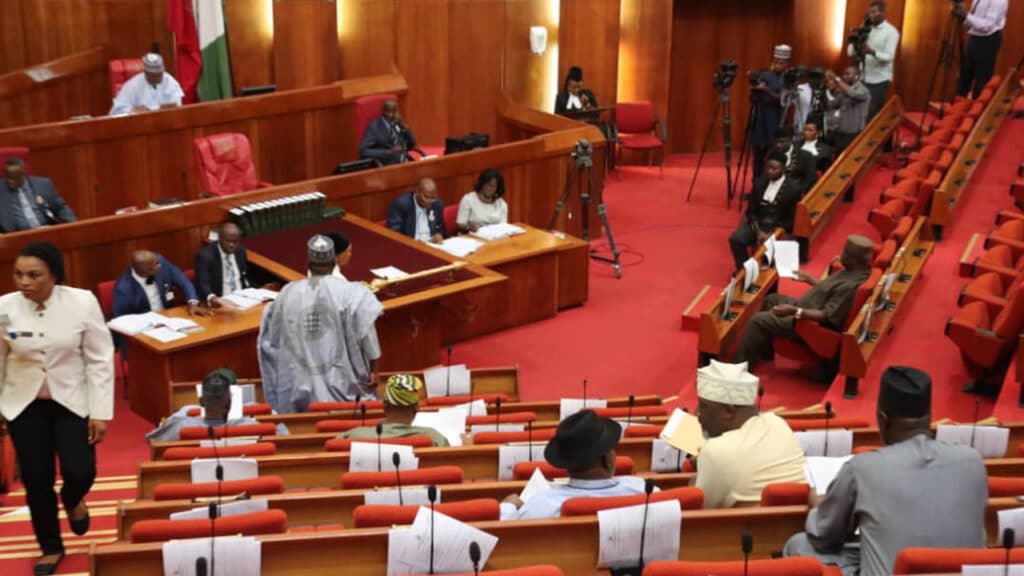
Senate President Godswill Akpabio announced the unanimous decision during Tuesday’s plenary session after lawmakers deliberated on the president’s formal request through the Committee of the Whole.
President Tinubu had written to the upper legislative chamber seeking constitutional backing for the deployment, citing Section 5(5), Part 2 of the 1999 Constitution, which mandates that the president consult the National Assembly before authorizing combat missions beyond Nigeria’s borders.
In his letter to the Senate, Tinubu explained that the Benin Republic government had issued an urgent appeal for military assistance after mutinous soldiers attempted to seize power on Sunday.
“This request is made further to a request received from the Government of Benin Republic for the exceptional and immediate provision of air support by the Armed Forces of the Federal Republic of Nigeria,” the president stated in the correspondence read by Akpabio.
He emphasized that the situation demanded swift external intervention, pointing to the longstanding ties between both nations and the collective security framework established under the Economic Community of West African States (ECOWAS).
“The distinguished Senate may wish to note that the Government of the Republic of Benin is currently faced with an attempted unconstitutional seizure of power and disruption and destabilization of democratic institutions,” Tinubu wrote.
Although the Senate only received the formal request on Tuesday, Nigerian Air Force fighter jets and ground troops had already been deployed on Sunday at the height of the crisis. The intervention came after President Patrice Talon’s government made two separate requests for emergency support.
According to a statement from the presidency, the Nigerian military played a crucial role in helping loyalist forces repel the coup plotters, who had briefly seized control of Benin’s national television station.
The mutineers, calling themselves the “Military Committee for Refoundation” and led by Colonel Pascal Tigri, declared the removal of President Talon during a televised broadcast before being overpowered by government forces.
Interior Minister Alassane Seidou later confirmed that security forces had successfully contained the situation and restored constitutional order. Colonel Tigri has since been declared wanted by authorities.
Speaking after the Senate’s approval, Akpabio described the decision as both timely and necessary for regional security. “An injury to one is an injury to all,” he declared, stressing that political instability in any ECOWAS member state poses a threat to the entire sub-region.
The attempted coup in Benin adds to growing concerns about democratic backsliding in West Africa, a region that has witnessed military takeovers in Mali, Niger, Burkina Faso, and Guinea in recent years.
While Benin has been regarded as one of the more stable democracies in the region, President Talon’s government has faced criticism over allegations of suppressing political opposition.
In a televised address following the failed coup, President Talon reassured citizens that his government had fully regained control and vowed that those responsible would face justice.
The Senate’s approval now paves the way for a formal, sustained Nigerian military presence in Benin as part of a broader regional stabilization effort that may also involve troops from other ECOWAS nations including Sierra Leone, Côte d’Ivoire, and Ghana.