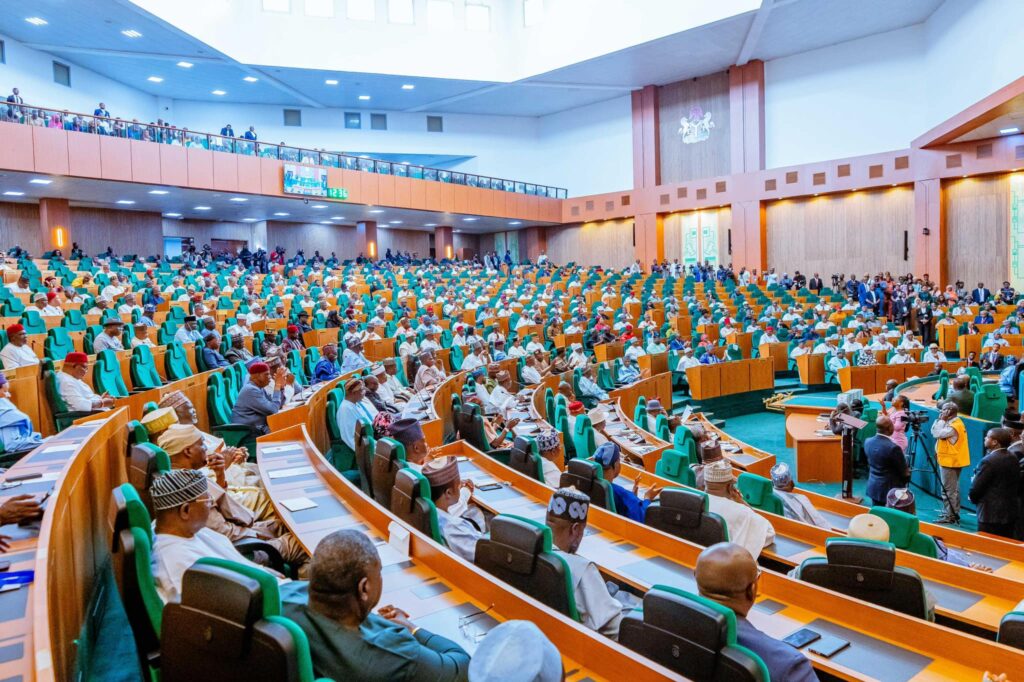
The Nigerian House of Representatives has ordered the immediate suspension of the West African Examinations Council’s planned Computer-Based Testing system for the 2026 Senior Secondary School Certificate Examination, pushing full implementation to the 2029/2030 academic session.
The directive, issued during Thursday’s plenary session, followed intense debate on a motion sponsored by Representative Kelechi Wogu, a Peoples Democratic Party lawmaker representing Rivers State. The motion, titled “Need for Intervention to Avert the Pending Massive Failure of Candidates Intending to Write the 2026 WAEC Examination Using Computer-Based Testing, Capable of Causing Depression and Deaths of Students,” highlighted critical infrastructure deficits across Nigerian secondary schools.
Representative Wogu emphasized that WAEC conducts qualification examinations essential for higher education admission, noting that tertiary institutions mandate at least five credit passes, including English Language and Mathematics. He pointed to the temporary shutdown of the 2025 WAEC results portal due to technical glitches as evidence of systemic unpreparedness for digital transformation.
The federal lawmaker expressed alarm that despite strong opposition from the Nigeria Union of Teachers and school administrators, particularly from rural areas where over 70 percent of Nigerian students attend classes, the Federal Ministry of Education had maintained its position to proceed with CBT implementation in 2026.
“Unlike JAMB examinations, WAEC candidates must sit for at least nine subjects, including practical, objective, and theory components,” Wogu explained during the debate. “Approximately 25,500 schools nationwide will present candidates for these examinations, which run concurrently over four months from March to July. Most of these institutions lack functional computer laboratories, qualified ICT instructors, reliable internet connectivity, and stable power supply.”
The House unanimously adopted the motion and issued comprehensive directives to address the infrastructure gap. The Federal Ministry of Education, working alongside state governments, must now include budgetary provisions for recruiting computer teachers, constructing ICT-equipped examination halls, installing internet facilities, and supplying standby generators across all secondary schools in the country. These provisions must appear in state budgets from 2026 through 2029.
Private schools have not been exempted from the directive. The legislators mandated proper monitoring and assessment of private institutions to ensure adequate facilities are in place before the 2030 rollout.
The House Committees on Basic Examination Bodies, Digital and Information Technology, Basic Education and Services, and Labour, Employment and Productivity received a four-week deadline to engage relevant stakeholders across education and technology sectors and report back for further legislative action.
Nigeria’s journey toward digital examinations began with the Joint Admissions and Matriculation Board, which pioneered CBT in 2013 and successfully conducted the first fully computer-based Unified Tertiary Matriculation Examination in 2015. The National Examinations Council and National Business and Technical Examinations Board have since introduced limited CBT elements in pilot programs.
WAEC announced its CBT transition plans in 2024 and conducted its first computer-based test for private candidates during the 2024 First Series examination between January 31 and February 17. The examination used a hybrid model with objective questions delivered digitally while essay and practical components remained paper-based.
The examination body had outlined stringent requirements for schools, including 250 functional laptops with 10 percent backup units, robust computer servers capable of supporting 250 systems simultaneously, Local Area Network infrastructure, functional air conditioning and lighting systems, uninterrupted power supply, backup generators with minimum 40kVA capacity, CCTV surveillance, and dedicated holding areas for candidates.
Education advocates supporting digital examinations argue the transition will enhance transparency, improve operational efficiency, and strengthen Nigeria’s competitive position in global education. However, the prevailing infrastructural challenges, particularly in rural communities, have fueled concerns about equity and accessibility.
The postponement provides breathing room for comprehensive preparation, potentially averting what legislators described as a catastrophic educational crisis that could trigger widespread student failure, psychological distress, and social consequences.